
Concrete Fence: What Homeowners Should Know Before Installation
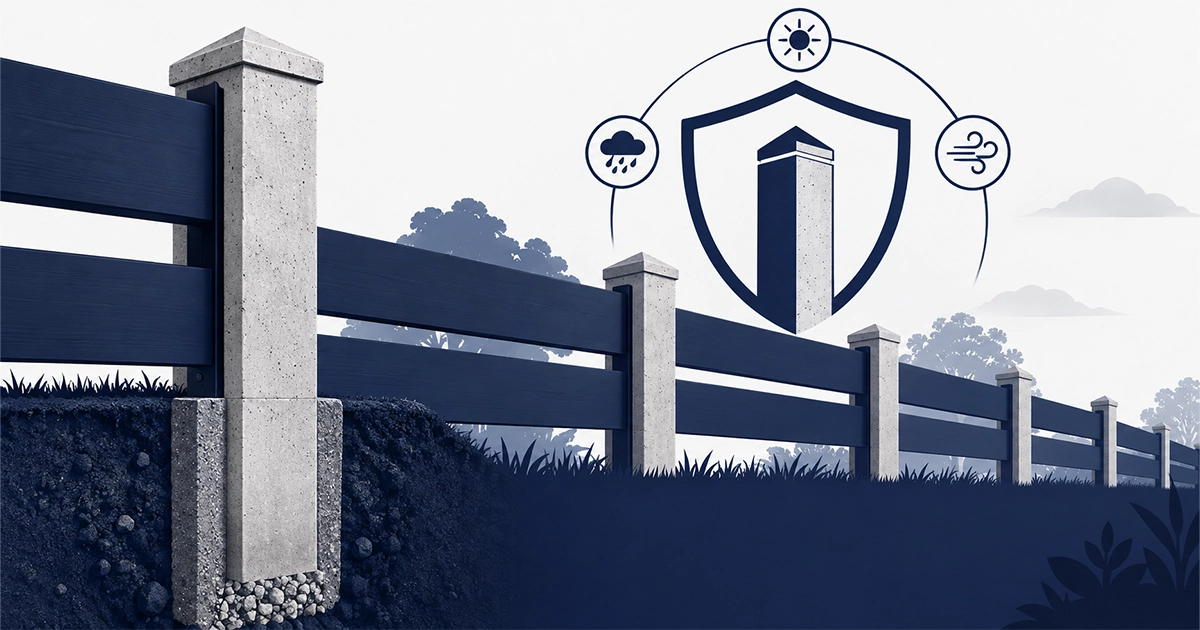
A concrete fence is a fence system that uses concrete, either as precast panels or as concrete posts, for strength and long life. The concrete fence post is the backbone of the system. It carries wind load, keeps panels straight, and resists rot and insects, which is why post quality decides how long the whole fence lasts.
Key takeaways
- Fences usually fail at the post, not the panel.
- A concrete fence post resists rot, termites, and moisture damage better than wood.
- A common rule is to bury about one third of the post’s total length.
- Gate posts need bigger footings than regular line posts.
- Check property lines, permits, HOA rules, and buried utilities before anyone digs.
Most people choose a fence by looking at the panels. Color, height, style. Very few stop to ask what is holding those panels up. Then a few windy seasons pass, one post starts to lean, and the whole fence line begins to look tired.
That is why a good concrete fence starts underground. Whether you are planning full concrete panels or a mix of concrete and metal, the posts do the heavy lifting. This guide walks you through what to know before installation, so you can ask better questions and avoid expensive surprises.
What Is a Concrete Fence, Really?
The phrase means different things to different people, and that confusion causes real headaches when you start collecting quotes. Usually it points to one of two setups.
The first is a precast system, where concrete panels slide into slotted concrete posts, a bit like shelves sliding into a bookcase. The second is a fence that uses concrete posts, or steel and wood posts anchored in poured concrete footings, to support panels made of iron, wood, vinyl, or wire.
Both fall under the umbrella of concrete fencing. Both depend on the same thing: a solid post.
Why the Concrete Fence Post Matters More Than the Panels
Fences rarely fail in the middle of a panel. They fail at the post. Wind pushes on every square foot of fence, and all of that force travels down the post and into the soil. If the post is undersized, too shallow, or set in loose ground, it moves. Once one post moves, panels bind, gates stop latching, and gaps start to open.
A well made concrete fence post holds up against rot, insects, and moisture, so it keeps its shape long after an untreated wood post would have softened. Its weight also helps it stay steady in gusts. Think of it as the foundation of a house. Nobody admires it, but everything depends on it.
Types of Concrete Fence Posts
Not every post is built for the same job. Here are the main options you will run into:
- Slotted precast posts: Grooves along the sides hold concrete panels in place. Common in full concrete panel systems.
- Channeled or drilled precast posts: Made to accept rails or brackets, so you can attach iron, wood, or wire sections.
- Poured in place footings: Strictly speaking, this is a steel or wood post anchored in a concrete base. Many homeowners still call it a concrete fencing post, so clarify this when you get quotes.
- Gate posts: Heavier posts with larger footings, since they carry the weight and swing of a gate every single day.
Pros and Cons of Concrete Fencing
What works in its favor
- Long service life when installed correctly
- No rot and no termite damage
- Does not burn
- Weight adds stability in strong wind
- Low maintenance compared to wood
What to weigh honestly
- Heavier materials need more labor and often equipment
- Higher upfront cost than most wood fences
- Harder to adjust or repair once set
- Cracks from impact or soil movement can let moisture reach the steel reinforcement inside
- The layout has to be right the first time
What Albuquerque Homeowners Should Think About
Every region tests a fence differently. Around Albuquerque and nearby communities, a few conditions deserve attention:
- Wind: Spring gusts put constant pressure on fence lines, so post depth and footing size matter.
- Sun: Strong UV exposure is hard on paint, stain, and sealers on any attached panels.
- Soil: Many properties have hard, rocky layers that make digging tough, and some soils shift over time. A post set in unstable ground will not stay plumb.
- Monsoon runoff: Heavy, fast rain can wash soil away from footings if drainage is ignored.
- Temperature swings: Winter freeze and thaw cycles can stress concrete that holds moisture.
Before You Install: A Practical Checklist
- Confirm your property line. Use a survey or plat if there is any doubt. Fence disputes with neighbors are avoidable.
- Check local rules. Fence height and placement limits vary, so confirm with the City of Albuquerque or your county before you start.
- Read your HOA guidelines. Some associations restrict materials, colors, or heights.
- Call 811. Utility lines can sit closer to the surface than you expect. Have them marked before digging.
- Plan your gates first. Decide where gates go, how wide they need to be, and which way they swing.
- Look at drainage and grade. Slopes and low spots affect post length and panel layout.
- Set a real budget. Include posts, panels, footings, gates, hardware, and any removal of an old fence.
How Deep and How Far Apart Should Posts Be?
There is no single answer, because it depends on fence height, soil, wind exposure, and the panel system. A common rule of thumb is to bury roughly one third of the post’s total length. For a 6 foot fence, that often means a post of about 9 feet with 3 feet underground.
Spacing usually falls between 6 and 8 feet, depending on panel size and manufacturer specifications. Gate posts, corner posts, and end posts generally need extra depth and a larger footing. Always follow the product specifications and local code, and ask your installer to explain why they chose the numbers they did.
How a Concrete Fence Post Installation Works
Here is the general flow, so you know what a professional job looks like:
- Layout: Mark the fence line with stakes and string, and mark every post location.
- Dig: Excavate holes to the required depth and width, wider at the base when the design calls for it.
- Prepare the base: Add compacted gravel if drainage is a concern.
- Set the post: Place the post, check that it is plumb in both directions, and brace it firmly.
- Pour or backfill: Fill with concrete or the specified mix, and slope the top so water runs away from the post.
- Cure: Give the concrete time to set. It gains most of its strength over about 28 days, so wait at least a couple of days before loading posts, and longer for heavy gates.
- Install panels and hardware: Only after the posts are stable and aligned.
Pairing Concrete Posts With Iron Gates and Panels
Concrete and iron make a strong team. Concrete gives you mass and stability, while iron adds security, style, and clean lines. The catch is that iron gates are heavy, and driveway gates that swing or slide put real stress on their posts. If the posts move even a little, the gate sags, drags, or refuses to latch.
That is why the gate and the posts should be planned together, not one after the other. Opening width, swing direction, automation, and hardware should all be settled before any concrete is poured.
At Iron Designs, we build custom driveway gates, single gates, double gates, and fencing and topper panels for homes and businesses across Albuquerque, Rio Rancho, Santa Fe, Bernalillo, Los Lunas, Belen, and Gallup. You can see the full list on our service areas page.
Common Mistakes to Avoid
- Setting posts too shallow to save on digging
- Skipping a plumb check while the concrete is still wet
- Using the same footing size for line posts and gate posts
- Ignoring drainage around the base of the post
- Hanging a heavy gate before the concrete has cured
- Guessing at the property line
- Choosing panels first and figuring out the posts later
Keeping Your Concrete Fencing Post Strong for Years
Concrete is low maintenance, not no maintenance. Walk your fence line once or twice a year and look for:
- Hairline cracks that could let in water, and seal them early
- Soil washing away around the base
- Posts that have started to lean
- Rust stains, which can point to exposed reinforcement
- Loose brackets or hardware where panels and gates attach
Small fixes now prevent big replacements later.
Frequently Asked Questions
How long does a concrete fence last?
Concrete fence systems commonly last for decades when posts are set correctly, drainage is managed, and cracks are repaired early. Concrete does not rot or attract termites, but poor footings, soil movement, and impact damage can shorten its life.
How deep should a concrete fence post be set?
A common rule is to bury roughly one third of the post’s total length, so a 6 foot fence often needs a post of about 9 feet with 3 feet underground. Gate posts and windy or loose soil sites usually need more. Always check the manufacturer specifications and local code.
Is a concrete fence more expensive than wood?
Usually it costs more upfront, because materials are heavier and installation takes more labor and equipment. Over the long run, fewer repairs and replacements can narrow the gap. Get written quotes to compare options on your own property.
Can I attach an iron gate to a concrete fence post?
Yes, but gate posts carry far more load than line posts. They typically need larger footings, reinforcement, and the right mounting hardware or embedded plates, so plan the gate and posts together.
Do I need a permit for a concrete fence in Albuquerque?
It depends on the height, location, and your neighborhood. Many areas regulate fence height and placement, and HOAs add their own rules. Confirm with the City of Albuquerque or your county and your HOA before digging.
What is the difference between a concrete fence post and a wood post set in concrete?
A concrete fence post is made of concrete, usually precast with steel reinforcement, so the post itself will not rot. A wood post set in concrete has a concrete footing, but the wood near the base can still hold moisture and decay.
Final Thoughts
A fence is only as strong as what holds it up. Before you fall in love with a panel style, get the foundation right: the right concrete fence post, the right depth, the right footing, and a clear plan for gates. Do that, and your fence will look good and stay straight for years.
If you are planning a fence or gate project and want a second opinion on layout, posts, or metalwork, the Iron Designs team is happy to help. Call us at (505) 357 7161 or request a free estimate. You can also visit us at 249 Muriel St SE Ste D, Albuquerque, NM 87123.
